Find modern kitchen serving cart with shelving units for home storage, hotel service, dining rooms
Source 30 verified listings for a modern kitchen serving cart with shelving units designed for home storage, hotel service, and dining rooms. Buyers can compare specifications, prices, and customization options from multiple suppliers in China.
Key considerations
Products List




Comprehensive Sourcing Guide
Strategic Sourcing Guide for Modern Kitchen Serving Carts with Shelving Units
Understanding Product Definitions and Core Attributes
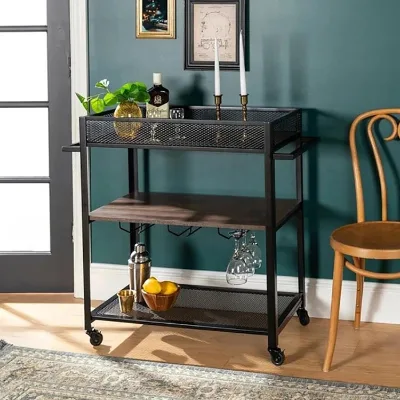
The modern kitchen serving cart with shelving units represents a versatile category of furniture designed to bridge the gap between storage utility and mobile service. In the context of B2B procurement, these units are often characterized by a rectangular structure and a multi-tier design, typically featuring three layers to maximize vertical storage space. The core functionality revolves around the ability to serve food and beverages in various settings, ranging from residential kitchens to hotel dining rooms and commercial service areas.
When evaluating product listings, buyers must distinguish between specific design styles. While some units adhere to a modern aesthetic with clean lines, others may incorporate Japanese design principles or offer customized configurations. A critical attribute to verify is the armrest configuration; some models are supplied with armrests for enhanced stability during transport, while others are designed as pure shelving units. The condition of the product is typically listed as new, and the folded state is generally unfolded for immediate use, though some knock-down (KD) structures require assembly upon delivery.
The material composition is a primary differentiator in this category. Supply chains often feature stainless steel for durability and hygiene, particularly in commercial or hotel environments. Conversely, other models may utilize a combination of plastic and glass, or medium-density fiberboard (MDF) with melamine finishes. The specific application scenarios dictate the material choice; for instance, a unit intended for a kitchen furniture setting requires different resistance properties compared to a mobile cart designed for a living room or bedroom. Buyers should carefully cross-reference the "Type" attribute, which may range from "Kitchen Room / Bathroom Service" to "Function: Kitchen Storage Cabinet," to ensure the product matches the intended operational environment.
Technical Specifications and Dimensional Standards
Technical specifications form the backbone of any procurement decision for kitchen serving carts. Dimensional accuracy is paramount, as these units must fit within specific spatial constraints while providing adequate storage volume. The supplied data indicates that standard dimensions vary significantly across models. For example, one specification lists a standard size of 41cm in length, 29cm in width, and 78cm in height, while another model is defined by dimensions of 36.5cm by 33cm by 66cm. These variations highlight the necessity for buyers to verify the "prod_standard" attribute against their own floor plans and storage requirements.
The structure of the cart is another critical technical factor. Many units are designed with a 3-layer configuration, which is explicitly noted in several product descriptions. The construction method often involves a knock-down (KD) structure, which facilitates efficient shipping and reduces packaging volume. This is particularly relevant for the "3-Tier Shelf" and "Mobile Cart" categories where logistics costs are a significant portion of the total landed cost. The packing details often specify a master carton or export packaging standard, utilizing 5-ply export cartons sealed with tape. Internal protection is frequently achieved through PE foam placed between pieces and plastic foam on the top and sides to prevent damage during transit.
Size customization is a prevalent feature in this market. While some models come with fixed dimensions, others offer "Customized" size options, allowing buyers to tailor the unit to specific needs. The "prod_model" identifiers, such as WHL64-022 or WHL64-055, serve as unique references for these variations. Buyers must ensure that the "Number of Layers" aligns with the "Description" of a 3-tier shelf, as discrepancies can lead to fulfillment errors. Furthermore, the "Standard" attribute may range from specific measurements to "Medum" or "Customizable," requiring direct confirmation with the supplier to avoid ambiguity in the final product delivery.
Compliance, Certification, and Safety Verification
In the realm of B2B furniture procurement, compliance and certification are often the most challenging aspects to verify without direct supplier engagement. The supplied product data does not explicitly list specific safety certifications, such as ISO standards or fire resistance ratings. Therefore, buyers must treat the absence of explicit certification data as a signal to request documentation rather than assuming compliance.
When sourcing stainless steel units, verifying the grade of the steel is essential for ensuring corrosion resistance, particularly in kitchen environments where moisture and cleaning agents are common. For units utilizing MDF and melamine, the formaldehyde emission levels and adherence to environmental standards (such as CARB Phase 2 or E1/E0 standards) must be confirmed. The "prod_standard" attribute mentioning "41Lx29Wx78Hcm" refers to dimensions, not a safety standard, so buyers should not conflate physical specifications with regulatory compliance.
Safety verification should also extend to the structural integrity of the "Knock-down" assembly. The "Packing Details" mention a 5-ply standard export carton, which implies a robust shipping container, but the in-use stability of the assembled unit must be tested. Buyers should inquire about load-bearing tests for each of the three tiers, especially for carts intended for heavy kitchen service. Additionally, the "OEM & ODM" acceptance indicates that suppliers are open to custom specifications, which often includes the ability to meet specific regional safety codes. However, the onus remains on the buyer to define these requirements clearly in the purchase order and request proof of compliance before mass production begins.
Cost Drivers and Economic Factors
The economic landscape for sourcing modern kitchen serving carts is influenced by several distinct cost drivers. The primary factor is the material composition. Stainless steel units generally command a higher price point due to the raw material costs and the manufacturing processes required for welding and finishing. In contrast, units made from plastic, glass, or MDF with melamine finishes may offer a more budget-friendly alternative, though they may have different durability profiles.
The observed price range in the market spans from $3.60 to $196.72 USD, reflecting the vast diversity in product quality, material, and customization levels. This wide range suggests that buyers must be cautious when comparing prices; a unit at the lower end of the spectrum may lack the structural reinforcement or finish quality required for high-traffic commercial use. The "Selling Units" attribute often lists "Single item," but bulk purchasing is common in B2B transactions.
Minimum Order Quantity (MOQ) is another significant economic constraint. The data indicates an MOQ range of 1 to 1000 units, with a specific high-confidence fact noting an MOQ of 300 units for certain models. This variability allows for flexibility, but buyers must align their order volume with the supplier's thresholds to secure favorable pricing. The "Delivery Time" of 45-60 working days for certain models also impacts the total cost of ownership, as longer lead times may necessitate higher inventory holding costs or expedited shipping fees to meet project deadlines.
Typical Applications and Usage Scenarios
The versatility of the modern kitchen serving cart allows it to serve multiple applications across different sectors. The "Usage" attribute frequently cites "Home," "Home Storage," and "Kitchen Furniture," indicating a strong residential market. In these settings, the cart often functions as a mobile island, providing additional counter space and storage for kitchen essentials. The "Application Scenarios" listed include Living Rooms, Bedrooms, Dining Rooms, and Apartments, highlighting its adaptability to various interior design styles.
Beyond residential use, these units are critical in commercial environments. The "Type" attribute explicitly mentions "Kitchen Room / Bathroom Service" and "Hotel" applications. In hotel settings, the "Product name" often refers to a "3-tier Mdf With Melamine Service Dining Car With Carrier," designed for room service or banquet operations. The "Function" as a "Kitchen Storage Cabinet" further supports its use in professional kitchens where organization and mobility are key.
The "Keywords" associated with these products, such as "Storage" and "Mobile Cart," reinforce their dual role as both a storage solution and a service vehicle. The "Style" can vary from Modern to Japanese, allowing buyers to match the cart to the specific aesthetic of the venue. Whether for a high-end hotel, a private residence, or a commercial kitchen, the ability to customize the design and size ensures that the cart can be integrated seamlessly into the existing workflow and decor.
Supplier Evaluation and Quality Control Protocols
Evaluating suppliers for kitchen serving carts requires a rigorous approach to quality control and capability assessment. The "Place of Origin" is consistently listed as China, with specific regions like Hebei mentioned. While this provides a geographical context, it does not guarantee quality; buyers must verify the supplier's production capacity and quality management systems. The "SAMPLE TIME" of 7-10 days is a critical metric for evaluating supplier responsiveness and the feasibility of prototyping.
Quality control should begin with the review of the "Packing Details." The use of standard export packaging, including 5-ply cartons and PE foam, is a positive indicator of logistical care. However, buyers should also inspect the "KD structure" to ensure that the knock-down components fit together precisely and that the hardware is of sufficient quality to maintain structural integrity over time. The "Design" attribute being "Customized" implies that the supplier has the engineering capability to adapt to specific client needs, which is a valuable asset for large-scale procurement.
Buyers should also assess the supplier's willingness to accept OEM and ODM requests. The "OEM & ODM: Accepted" status suggests flexibility, but it is essential to clarify the scope of these services. Does the supplier handle the design, or do they merely execute the buyer's specifications? Additionally, the "Mail Packing" attribute marked as "Y" (Yes) indicates a readiness for specific packaging requests, which can be crucial for branding or logistical efficiency. Regular quality audits and pre-shipment inspections are recommended to ensure that the final products meet the agreed-upon standards for dimensions, finish, and assembly.
Long-Term Procurement and Supply Chain Considerations
Sourcing kitchen serving carts is not merely a transactional activity but a strategic partnership that requires long-term planning. The "Lead Time" of 45-60 working days for certain models necessitates careful inventory management. Buyers must forecast demand accurately to avoid stockouts or overstocking, especially given the variability in production schedules. The "Delivery Time" should be factored into the overall project timeline, particularly for commercial installations where delays can impact operations.
Sustainability and after-sales support are also critical long-term considerations. While the "Material" may be stainless steel or plastic, the end-of-life disposal and recyclability of these materials should be evaluated. Buyers should inquire about the supplier's environmental policies and whether they offer take-back programs or use sustainable packaging materials. Furthermore, the availability of spare parts for the "Knock-down" structure is essential for maintaining the units over their lifespan.
The "Customization" attribute offers a pathway for long-term value creation. By working with suppliers who can adapt designs, buyers can create a unique product line that differentiates their brand in the market. However, this requires a clear communication channel and a robust contract that defines the intellectual property rights and quality standards. Ultimately, the success of the procurement strategy depends on the buyer's ability to navigate the complexities of the supply chain, from initial sampling to final delivery, ensuring that the modern kitchen serving carts meet both functional and aesthetic requirements for years to come.
FAQs
What customization options are available for these carts?
Customization is available for these modern kitchen serving carts with shelving units. Buyers can request specific dimensions, styles, and materials to match their requirements, as the product attributes confirm customizable design and size options.
Which materials are commonly used in these units?
Common materials include stainless steel, plastic, glass, and MDF with melamine finishes. The specific material depends on the model, with stainless steel often used for durability in hotel settings and MDF for residential dining applications.
How is the product typically packed for shipping?
Products are typically packed in master cartons or export packaging with PE foam protection. Details indicate a 5-ply standard export carton sealed with tape, often featuring a knock-down structure to reduce volume during transit.
Can I order a single item as a sample?
Yes, the selling units are listed as single items, allowing for sample orders. However, bulk orders often have a minimum order quantity of 300 pieces, and sample preparation time typically ranges from 7 to 10 days.
What is the typical lead time for delivery?
The typical delivery time is 45 to 60 working days for certain models. This lead time applies to production and shipping from the origin, which is listed as China, specifically the Hebei region.
Are these carts suitable for hotel service?
Yes, these carts are suitable for hotel service and commercial kitchen environments. Product descriptions explicitly mention their use as service dining cars with carriers for hotels and their function as kitchen storage cabinets.
What is the standard structure of these shelving units?
The standard structure is a 3-layer design, often described as a 3-tier shelf. Many units utilize a knock-down construction method to facilitate assembly and efficient packaging, with some models including armrests for stability.